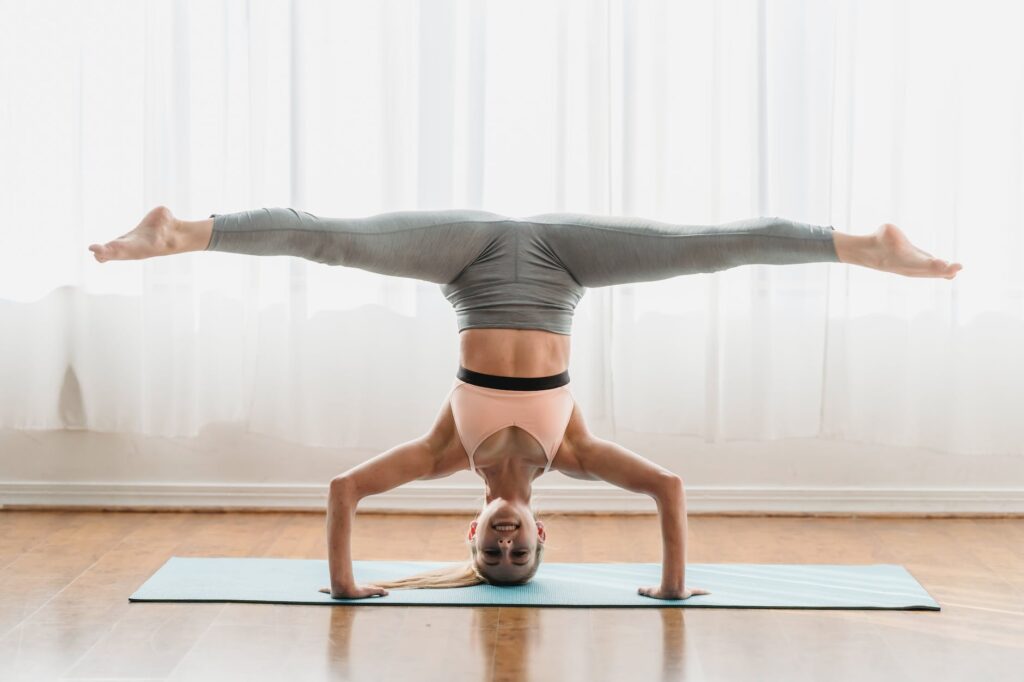
How to Overcome Fear and Build Confidence Through Gymnastics Headstands
Are you looking to build confidence and overcome fear through gymnastics headstands? If so, you’ve come to the right place! Gymnastics headstands can be a great way to build confidence and overcome fear. Here are some tips to help you get started.
1. Start with a wall. Before attempting a headstand, it’s important to start with a wall. This will help you get used to the feeling of being upside down and will give you something to lean on for support. Place your hands on the wall and slowly walk your feet up the wall until your body is in an inverted “V” shape. Hold this position for a few seconds and then slowly lower your feet back to the ground.
2. Practice with a spotter. Once you’re comfortable with the wall, it’s time to practice with a spotter. Have your spotter stand behind you and place their hands on your lower back for support. Slowly walk your feet up the wall until your body is in an inverted “V” shape. Hold this position for a few seconds and then slowly lower your feet back to the ground.
3. Try a headstand without a wall. Once you’re comfortable with the wall and spotter, it’s time to try a headstand without any support. Start by kneeling on the ground and then slowly walk your feet up your body until your body is in an inverted “V” shape. Hold this position for a few seconds and then slowly lower your feet back to the ground.
By following these steps, you’ll be able to build confidence and overcome fear through gymnastics headstands. Remember to take it slow and be patient with yourself. With practice and dedication, you’ll be able to master the headstand in no time!
Tips for Mastering the Gymnastics Headstand and Achieving Your Goals
1. Start with the basics: Before attempting a headstand, it is important to master the basics of gymnastics. This includes mastering basic body positions, such as the bridge, handstand, and cartwheel. These positions will help you build the strength and balance needed for a headstand.
2. Practice with a spotter: When attempting a headstand, it is important to have a spotter nearby. A spotter can help you maintain balance and provide support if you lose your balance.
3. Use a wall: When first attempting a headstand, it is helpful to use a wall for support. Place your hands on the wall and slowly walk your feet up the wall until you are in a headstand position. This will help you build the strength and balance needed for a headstand.
4. Take your time: Don’t rush into a headstand. Take your time and practice the basics until you feel comfortable and confident.
5. Focus on your form: When attempting a headstand, it is important to focus on your form. Make sure your body is in a straight line and your core is engaged.
6. Set goals: Setting goals can help you stay motivated and focused on achieving your headstand. Set short-term and long-term goals and track your progress.
7. Have fun: Don’t forget to have fun! Gymnastics is a great way to stay active and have fun. Enjoy the process and celebrate your successes.
How gymnastics training supports young athletes
How Headstands Help Kids Build Confidence Through Gymnastics is most helpful when families understand how the class, lesson, or activity fits a child’s age, confidence, and current skill level. At FlipZone, gymnastics training is taught with a focus on safe progress, positive coaching, and steady skill development. That means kids can build strength and coordination while also learning how to listen, try again, and celebrate improvement.
Parents comparing options in Lee Summit can start with FlipZone’s recreational gymnastics classes to see which program best matches their child’s goals. Families who are unsure where to begin can also contact FlipZone for help choosing an age-appropriate next step.
What parents should look for
- Coaches who explain skills clearly and keep children moving safely.
- Classes that balance fun, structure, and steady repetition.
- Activities that build confidence as well as strength and flexibility.
- A program path that lets children grow from beginner skills into bigger goals.
A strong gymnastics program should feel encouraging, organized, and developmentally appropriate. The goal is not only to learn a cartwheel, handstand, routine, or tumbling pass; it is to help children become more confident movers. For families who want broader background on the sport, USA Gymnastics offers additional information about gymnastics participation and athlete development.
Ready to take the next step?
If your child is curious about gymnastics training, FlipZone can help you choose a starting point that feels challenging without being overwhelming. A good first experience can make gymnastics feel exciting, achievable, and worth continuing.