
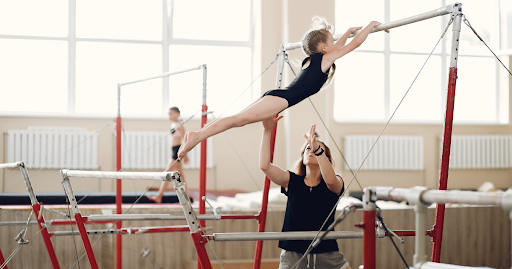
Choosing a gymnastics program for your child is about more than finding a convenient class time or a gym close to home. Parents also want to know their child will be learning in an environment where safety, supervision, coaching quality, and age-appropriate progress are taken seriously. Understanding what a quality gymnastics program should provide can make it much easier to evaluate your options and feel confident about where your child trains.
The best gymnastics safety standards go beyond padded equipment. A safe gymnastics facility should combine qualified coaching, appropriate supervision, well-maintained equipment, structured skill progressions, emergency procedures, athlete protection policies, and clear communication with parents. For families comparing gymnastics classes in Lee’s Summit, Missouri, knowing what to look for can help separate a well-organized program from one that simply looks impressive at first glance.
Parents should expect trained coaches, appropriate class supervision, safe equipment, structured lesson plans, clear injury procedures, athlete protection policies, and skill progressions suited to a child’s age and ability. Parents should also feel comfortable asking about gymnastics coaching qualifications, staff screening, class ratios, spotting practices, emergency procedures, and how the facility handles concerns.
Safety should be visible in the way classes are organized, how coaches communicate, how athletes move through the gym, and how new skills are introduced. A strong safety culture is not limited to a policy posted on a wall. It should be reflected in everyday decisions made throughout every practice.
Coaching is one of the most important parts of gymnastics training safety because gymnastics involves balance, rotation, impact, strength, flexibility, body awareness, and increasingly complex movement patterns. Children need instructors who understand how to teach those skills progressively and who can recognize when a gymnast is ready to advance or needs additional time developing a foundation.
Parents can ask what training or certifications coaches complete, how much experience they have with specific age groups, whether new instructors are supervised, and what continuing education is expected. These questions are especially important when children move into higher-level skills that require more advanced instruction, spotting, strength, and technical understanding.
For coaches participating through USA Gymnastics, competitive coach membership requirements can include safety education, background screening, SafeSport training, fundamental instruction education, and concussion education. Those requirements apply specifically within the USA Gymnastics framework, but they provide useful examples of the types of gymnastics coaching qualifications parents may want to ask about when comparing facilities.
Good coaches also understand when not to push a skill. Strong instruction develops strength, coordination, confidence, body positioning, and technique before moving a gymnast toward greater difficulty. Progress should be based on readiness rather than pressure to advance quickly.
Even an experienced coach can only supervise a certain number of children effectively. Class size matters because gymnastics requires observation, correction, equipment management, movement between stations, and sometimes direct spotting. When too many students are competing for one coach’s attention, it may become more difficult to provide the individual feedback young gymnasts need.
A safe gymnastics facility should organize classes so instructors can monitor athletes closely, provide timely corrections, and help prevent children from attempting skills before they are ready. Appropriate supervision is particularly important for beginners and younger children who are still learning basic gym rules, body control, spatial awareness, and how to safely navigate equipment.
FlipZone emphasizes low student-to-teacher ratios and personalized instruction as part of its approach to gymnastics training. That focus allows coaches to pay closer attention to individual development while working with children and teens across recreational gymnastics, competitive programs, and private lessons.
For parents, class ratios are therefore worth asking about before enrollment. A smaller, appropriately supervised class can create more opportunities for corrections, encouragement, repetition, and skill development without children becoming lost in a large group.
Gymnastics equipment should do more than look clean. Mats, bars, beams, trampolines, landing areas, training blocks, and other apparatus should be appropriate for the athletes using them and maintained as part of regular facility operations. Coaches should also make sure equipment is positioned correctly for the activity being taught.
Parents do not need to inspect every piece of equipment themselves, but they can notice practical details when visiting a gym. Look at whether landing areas are clear, whether mats appear properly positioned, whether athletes wait their turn instead of moving through active training zones, and whether coaches control traffic between different stations.
Good child sports safety often depends on these simple systems. Equipment should match a child’s size, ability, and stage of development, while the surrounding training space should allow athletes to move safely without unnecessary distractions or collisions.
A well-organized gym should feel active without feeling chaotic. Parents should be able to see that instructors know where students are, what they are practicing, and which areas of the gym are currently being used.
One of the clearest signs of responsible gymnastics training safety is a step-by-step approach to skill development. Gymnastics skills build on one another, which means foundational strength, flexibility, balance, body positions, and landing mechanics often need to be established before a child moves toward more difficult movements.
Before introducing a more advanced skill, coaches may use drills, modified equipment, progressions, spotting, and repeated practice of individual components. This approach allows gymnasts to develop greater control and confidence while giving coaches opportunities to evaluate technique.
Parents should be cautious of any environment that treats rapid advancement as the primary measure of success. Repeating fundamentals is not a sign that a child is falling behind. In many cases, those repetitions help create safer and more consistent gymnastics over time.
A child’s progress should reflect readiness, technique, confidence, and physical development rather than pressure to keep pace with another gymnast. Every athlete develops differently, particularly during childhood when strength, coordination, and confidence can change significantly from one stage to another.
Physical safety is only one part of creating a responsible youth sports environment. Parents should also expect facilities to take athlete welfare seriously by having clear expectations regarding bullying, harassment, emotional misconduct, physical misconduct, inappropriate behavior, and adult interactions with minors.
Youth sports organizations increasingly recognize that child sports safety includes both physical and emotional well-being. Policies should explain what behavior is acceptable, what conduct is prohibited, how concerns can be raised, and how those concerns will be addressed.
Parents should ask what athlete protection policies apply at the facility they are considering and how those policies are communicated to staff, athletes, and families. A strong program should be able to explain its expectations clearly rather than treating safety questions as inconvenient.
Children should also understand that they are allowed to speak up when something feels uncomfortable, confusing, or unsafe. Creating that environment requires coaches and parents to reinforce the idea that asking questions or reporting concerns is part of responsible participation in sports.
Parents should know what safeguards are in place before adults are given positions of authority with children. Background screening can be an important part of that process, although screening alone should never be treated as a complete safety system.
Responsible youth programs should combine appropriate screening practices with staff training, supervision, clear conduct expectations, reporting procedures, and accountability. Parents can ask whether coaches and other adults who regularly interact with athletes are screened and what additional oversight the facility uses.
Staff accountability also means parents know who is responsible for their child during a class. Coaches should have clearly defined roles, and athletes should not be left to practice potentially dangerous skills without appropriate supervision.
A professional gymnastics facility should be comfortable answering questions about who works with children and the procedures designed to support their safety. Transparency in this area helps parents understand how seriously the organization approaches its responsibilities.
No youth sport can promise that injuries will never happen. Gymnastics is a physical activity, so the more useful question is whether a facility takes reasonable steps to reduce risk and has a clear plan for responding when something does happen.
Parents should expect established procedures for injuries, emergency communication, and circumstances in which an athlete should stop participating. Coaches should understand that symptoms such as pain, dizziness, confusion, unusual fatigue, or difficulty continuing an activity may require a child to stop and be evaluated.
Parents can ask what happens if their child is injured during class, how they will be contacted, who makes decisions about returning to activity, and what information is documented. These questions help families understand whether the facility has a thoughtful response plan rather than improvising when an incident occurs.
Clear injury procedures are an important component of child sports safety because they place the athlete’s well-being ahead of finishing a practice or immediately returning to a skill. Children should also understand that reporting pain or discomfort is responsible behavior, not something they should hide to avoid disappointing a coach.
Safe coaching is both technical and emotional. Children should be corrected and challenged without humiliation, intimidation, threats, or fear-based motivation. A positive gymnastics environment can still be structured, disciplined, and demanding while treating athletes with patience and respect.
Good coaching combines expectations with encouragement. Athletes should understand what they are working toward, why certain skills require more practice, and what they can do to continue improving. This approach can help children become more confident while learning that mistakes are a normal part of athletic development.
FlipZone emphasizes a friendly, supportive, and professional environment, with communication intended to encourage students while reassuring parents. The goal is to create an atmosphere where children can develop skills, confidence, coordination, perseverance, and personal growth.
Parents can pay attention to how their child feels before and after class. A child may naturally feel challenged when learning something difficult, but consistently feeling frightened, embarrassed, or afraid of making mistakes can be different. Gymnastics should help young athletes build confidence alongside physical ability.
Clear communication and transparency with parents are also essential parts of strong gymnastics safety standards. Families should know who to contact with questions, how class placement decisions are made, what children should wear, what behavior is expected, and how concerns are handled.
Good communication also helps parents understand what their child is currently learning and why certain progressions may take time. When parents understand the training process, they are less likely to view slower advancement as a problem and more likely to appreciate the importance of developing foundational skills properly.
Parents should also feel comfortable talking with their children after class about what they practiced and how they felt. Asking open-ended questions about what was fun, what was challenging, and what skills they worked on can keep communication open without making every conversation feel like an investigation.
A trustworthy program should not make parents feel uncomfortable asking reasonable questions. Open communication creates accountability while helping coaches and families work together to support the athlete.
Families looking for gymnastics classes in Lee’s Summit should consider safety alongside schedule, location, coaching style, program options, and overall fit. The gym that is closest to home is not automatically the best choice if its training environment does not meet the standards your family expects.
FlipZone is a family-owned and operated gymnastics facility in Lee’s Summit with more than 22 years of gymnastics coaching and instructing experience. Its program approach emphasizes personalized coaching, low student-to-teacher ratios, and a safe, structured learning environment for children and teens. Programs include recreational gymnastics, competitive gymnastics training, private lessons, and gymnastics birthday parties.
These qualities may be particularly important for parents looking for children’s gymnastics in Lee’s Summit where attentive instruction and individual development are priorities. When visiting or contacting any local gymnastics program, ask about coaching qualifications, supervision, equipment practices, injury procedures, athlete protection, and skill progression.
A quality gymnastics facility should welcome thoughtful questions because informed parents are an important part of creating a positive experience for young athletes.
Before choosing a gymnastics program, parents may want to ask:
These questions turn the broad idea of gymnastics safety standards into specific information families can evaluate. There is no single answer that tells parents everything they need to know, so it is more useful to consider how all of the facility’s practices work together.
Experienced coaching without appropriate supervision is not enough, just as quality equipment without structured skill progression is not enough. Written safety policies are also only meaningful when coaches and staff follow them consistently during everyday training.
The safest gymnastics environments are built through consistent habits, thoughtful instruction, and clear expectations. Qualified coaches matter, equipment matters, class ratios matter, communication matters, and athlete protection policies matter. The strongest programs bring these elements together so children are supervised carefully, taught progressively, treated respectfully, and encouraged to communicate when something does not feel right.
For parents, choosing a safe gymnastics facility means looking beyond the surface. Ask how coaches are trained, watch how instructors interact with students, pay attention to how classes are organized, and learn how concerns and injuries are handled. Most importantly, look for an environment where your child can develop strength, coordination, confidence, and gymnastics skills without safety being sacrificed for speed or performance.
For families exploring gymnastics training in Lee’s Summit, FlipZone offers recreational, competitive, and private gymnastics options for children and teens, with personalized instruction and low student-to-teacher ratios as central parts of its program approach. Parents considering gymnastics for their child can contact FlipZone to learn more about current classes, enrollment options, age and skill-level placement, and the safety procedures that apply to their child’s program.