
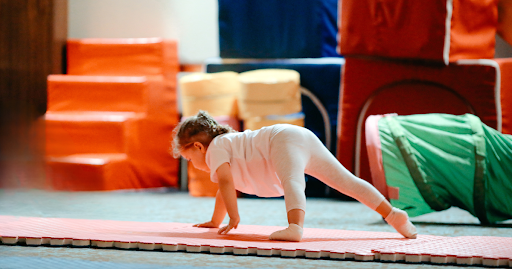
For many parents, preschool is the stage when children begin testing what they can do on their own. They are learning to follow directions, take turns, try unfamiliar activities, manage frustration, and feel proud when practice turns into progress. Preschool gymnastics can support that stage by giving young children a structured place to move, explore, and build confidence through achievable physical challenges. Well-designed preschool gymnastics classes can also help children become more comfortable following instructions, participating in group activities, and developing new skills at their own pace.
Gymnastics for preschoolers is not about rushing children into advanced skills. At this age, the most valuable experiences usually focus on balance, coordination, body awareness, listening, safe movement, and learning how to participate in a class. When those experiences are encouraging and age appropriate, children can begin building a positive relationship with movement that can carry into later childhood.
Preschool gymnastic classes can build confidence because children get repeated opportunities to attempt manageable challenges, receive guidance, practice a skill, and experience improvement. A child who is initially unsure about balancing, jumping, climbing, or following a movement sequence can gradually learn that unfamiliar does not have to mean impossible.
That process matters because confidence at this age is often built through action rather than explanation. A preschooler may not describe confidence in adult terms, but they understand the feeling of trying again, completing a task, hearing encouragement, and realizing they can do something that once seemed difficult. Early childhood gymnastics training can create many of these small mastery moments within a structured class.
Young children naturally want to move, but a structured gymnastics environment can help turn that energy into purposeful learning. Instead of simply running, climbing, or jumping, children begin practicing how to control those movements, follow a sequence, and repeat an activity with greater awareness.
In beginner gymnastics for ages 3 to 5, progress may look very different from what parents see in older programs. Success can mean learning to wait for a turn, walk across a low balance surface, land with better control, complete a simple obstacle sequence, or listen to a coach from start to finish. Parents should focus less on advanced skills and more on whether their child is becoming more comfortable moving, listening, participating, and trying.
Preschool-aged children are still learning how their bodies move through space. Gymnastics gives them opportunities to practice changing direction, balancing, reaching, rolling, landing, climbing, and coordinating multiple movements in a controlled setting.
These activities can help children become more aware of where their hands, feet, and body are during movement. That awareness can support playground activities, future sports, dance, active games, and everyday physical play. FlipZone’s mission and values specifically emphasize strength, coordination, perseverance, social skills, and personalized development.
One of the most useful lessons in early childhood gymnastics training has little to do with perfect technique. It is learning that it is okay not to know how to do something yet. A preschooler may hesitate the first time they encounter an unfamiliar station or movement, then become more willing to try after patient instruction and repetition.
That pattern is closely connected to confidence because young children are learning how to respond when something feels difficult. A supportive class gives them opportunities to experience challenges without making every mistake feel like failure. Progress becomes something to work toward rather than something they are expected to achieve immediately.
A gymnastics class introduces children to a different kind of learning environment than free play. They may need to listen for their name, watch a demonstration, wait for a signal, move to a new station, or remember a short sequence of instructions.
These routines can help preschoolers practice attention and participation in an active setting. Parents looking at toddler gymnastics programs or preschool classes should pay attention to how coaches communicate. Instructions should be simple, age appropriate, encouraging, and clear enough for young children to understand.
Class size is especially important when children are young. Preschoolers may need extra reminders, demonstrations, or time to understand what they are being asked to do. When instructors can pay attention to individual children, they are better positioned to notice hesitation, celebrate progress, and adjust expectations when needed.
FlipZone’s identifies low student-to-teacher ratios and personalized instruction as core strengths. For parents comparing gymnastics classes in Lee’s Summit, this is a useful factor to consider because individual attention can influence how comfortable a young beginner feels in class.
Preschool gymnastics is a physical activity, but children are also participating alongside other children. They learn to share space, take turns, watch classmates, respond to a coach, and celebrate accomplishments within a group. These interactions can help children become more comfortable participating around peers without requiring the experience to become highly competitive.
Gymnastics can also create age-appropriate opportunities for growing independence. Children may learn to enter a class, listen to another trusted adult, attempt tasks, and complete activities without a parent doing everything for them. FlipZone’s knowledge base includes social skills and perseverance among the developmental qualities emphasized in its training approach.
Parents sometimes wonder what their child should be learning in a beginner class. At ages 3 to 5, the focus should generally be on safe, developmentally appropriate foundations rather than advanced gymnastics.
A class may introduce basic balance, rolling, jumping, landing, body positions, simple strength activities, flexibility, coordination drills, and movement patterns. The exact activities will vary by facility and child, so parents should ask how classes are grouped and how coaches determine readiness.
Early gymnastics should build a foundation rather than race children toward difficult skills. Learning to move with greater control, listen to instruction, persist through a challenge, and feel proud of progress can provide a strong starting point for later gymnastics or other sports.
Confidence does not always come from succeeding on the first attempt. For preschool-aged children, an important part of learning is discovering that a skill can feel difficult at first and become easier with practice.
A child may need several attempts to complete a movement or remember the order of a simple activity. When coaches respond with patience and encouragement, the child has an opportunity to learn that improvement often comes through repetition. This can make perseverance feel positive rather than frustrating.
That lesson can extend beyond gymnastics. Children regularly encounter new challenges in school, social situations, sports, and everyday routines. Learning to keep trying in a structured and supportive environment can give them an early framework for responding to future challenges.
Structure is important, but preschool gymnastic classes should still feel enjoyable. Young children often learn best when activities are engaging enough to hold their attention and give them a reason to keep participating.
A well-designed class can combine movement, instruction, repetition, and age-appropriate fun. The goal is not simply to entertain children, but to create an environment where learning feels approachable and positive.
FlipZone describes its desired environment as safe, fun, supportive, and structured, with communication that is friendly, encouraging, and professional. That kind of atmosphere is especially relevant for young beginners who may be experiencing an organized gymnastics setting for the first time.
Parents comparing programs should look for attentive coaching, age-appropriate instruction, appropriate supervision, clear safety expectations, organized equipment, positive communication, and a progression that fits young beginners. It is also helpful to ask how new students are placed, how coaches respond when a child is hesitant, and how progress is communicated.
The environment matters as much as the activity. A strong class can be fun and energetic while still giving young children clear routines, encouragement, and room to make mistakes as they learn.
Parents may also want to observe how coaches respond when children struggle. A supportive instructor should be able to correct a child without making the experience embarrassing or discouraging. At this age, the way feedback is delivered can strongly influence whether a child becomes excited to keep learning.
Families searching for preschool gymnastic classes in Lee’s Summit or gymnastics for preschoolers near Lee’s Summit should consider more than distance from home. Coaching approach, class size, safety, age placement, and the overall atmosphere can all affect whether a young child enjoys the experience.
FlipZone is a family-owned and operated gymnastics facility in Lee’s Summit with more than 22 years of gymnastics instruction experience. The facility serves children beginning at age 2.5 through the teen years and emphasizes personalized instruction, low student-to-teacher ratios, structured training, and a safe and fun learning environment.
Families searching for gymnastics classes in Lee’s Summit, Missouri, children’s gymnastics in Lee’s Summit, or beginner gymnastics options can benefit from asking about current age groupings before enrolling.
Because class schedules and age groupings can change, parents looking specifically for beginner gymnastics for ages 3 to 5, preschool classes, or younger age options should contact FlipZone to confirm current class availability and placement. This helps families find the class that best matches their child’s age, experience, and readiness.
Starting ages vary by facility and by a child’s readiness. FlipZone’s project information states that its gymnastics offerings serve children as early as 14 months old, but parents should confirm the current schedule and appropriate class placement before enrolling.
Beginner programs are designed for children who are still learning foundational skills, so prior gymnastics experience is not generally the point of an introductory class. Parents can share their child’s age, prior activities, and comfort level so the facility can recommend an appropriate starting point.
Clothing should allow a child to move comfortably and safely without loose material getting in the way. FlipZone recommends a leotard or fitted athletic clothing and advises avoiding loose clothing and jewelry for safety.
Gymnastics can give children structured opportunities to try, practice, improve, and participate around others. Confidence develops differently for every child, so the strongest environment is one that encourages progress without forcing a child to move faster than they are ready.
The greatest value of preschool gymnastic classes is not how quickly a child learns a particular skill. It is the opportunity to build a foundation of movement, confidence, perseverance, listening, coordination, and positive participation at a stage when children are discovering what they can do.
For families exploring gymnastics for preschoolers, early childhood gymnastics training, toddler gymnastics programs, or beginner gymnastics for ages 3 to 5, the best program should make development feel encouraging rather than rushed. Look for a facility where coaches understand young children, instruction is structured and age appropriate, and progress is measured against the individual child rather than the rest of the class.
Families in Lee’s Summit who want to learn more about early gymnastics options can contact FlipZone to ask about current age group availability, class placement, schedules, and enrollment. With the right environment and the right pace, an early gymnastics experience can help a child begin building confidence that reaches far beyond the gym.