
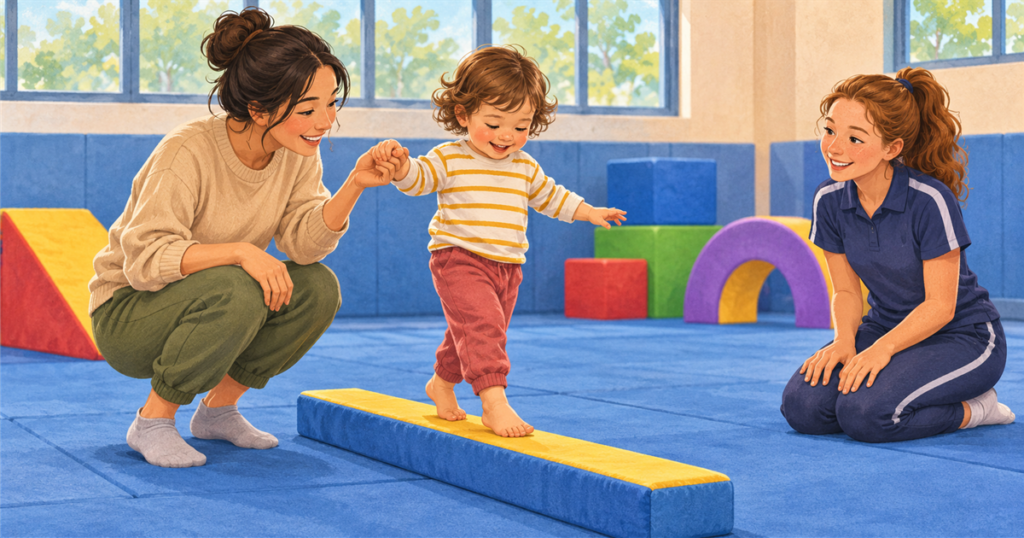
Gymnastics for toddlers gives young children a chance to try simple movements in a coach-led setting. In a parent-child class, a caregiver takes part with the child and helps them follow the routine. For families in Lee’s Summit, the most useful question is what kind of class fits their child right now. A toddler who reaches for your hand in a new room may enjoy moving alongside you. A preschooler who is comfortable joining a group may be ready to follow a coach more independently.
FlipZone’s in-gym recreational program lists a parent-child starting age of 2½. Class labels and age ranges vary between gyms, so check the specific group before planning a visit. FlipZone program overview
Young children often invent their own movement challenges. A curb becomes a balance line. A cushion becomes something to climb over. A coach-led class gives families a place to explore similar ideas with age-appropriate activities, a predictable routine, and someone to guide the group. It can also give caregivers a weekly activity to share when the playground is wet or the family wants a regular indoor option.
For children ages 3 to 5, the CDC encourages physical activity throughout the day through varied active play. A gymnastics class can fit alongside outdoor play, dancing, or riding a tricycle. For a family choosing a weekly activity, the practical test is whether the child enjoys moving and the routine works at home. CDC guidance on physical activity for children
A parent-child class is a coached group session in which a parent or other approved caregiver participates with the child. The instructor leads the activities. The adult helps the child listen for a cue, move to the next station, or return to the group after a pause. Ask the gym which adults can accompany a child and whether the same adult needs to attend each week.
Imagine a class with a short movement circuit. The coach might ask children to step over a low marker, follow a line on the floor, and stop at a colored spot. A child may want to repeat the first task several times. Another may watch a caregiver walk the line before trying it. These are examples of how a coach might introduce a circuit. The actual equipment and activities depend on the program.
A caregiver can give the child time to respond to the instructor before offering help. For example, when the coach points to the next station, wait a beat and see whether your child notices. If they need a prompt, point to the spot or repeat the coach’s cue in a few words. Ask the instructor how they want you to assist around equipment.
Age helps narrow the choice. The other question is how your child handles the kind of group they’ll be joining. Some preschool gymnastics classes expect children to participate independently. Others may offer a different format, so ask who stays on the floor and where caregivers wait. FlipZone describes its recreational classes as age grouped, with skills individualized within the group. FlipZone recreational program
Start here if your child usually explores new spaces with you nearby or uses your help to switch from one activity to another. That might look like a child who loves climbing but takes your hand when a group moves across the room. Having you beside them can make the routine more familiar while they learn the coach’s cues.
Ask what active participation means for the adult. One caregiver may be able to stay near the child throughout class, while another needs to know whether the activities involve repeated kneeling or moving around the floor. If you typically bring a younger sibling, ask the gym what arrangements are possible before choosing a time.
An independent group may be worth discussing if your child is eligible by age, is comfortable with a caregiver watching from a designated area, and can usually respond to a short cue from another adult. They may still need reminders or have quiet days. Share examples with the coach, such as how they join a group at preschool or follow directions during a library activity.
If both options are available, tell the gym what you want your child to get out of the experience. A caregiver looking for something to do together might prefer the shared format. A child eager to take turns with peers and work with the coach might enjoy trying the independent group. FlipZone’s guide to preschool gymnastics
When the first choice is unclear, describe a recent outing. For example, tell the coach whether your child joined a song at story time, stayed close to you on a playground, or needed help leaving a favorite activity. These details are more useful for discussing the right format than a general description such as shy, active, or ready for preschool.
Ask for the minimum age in months. A listing described as toddler gymnastics could start at 24 months, 30 months, or another age chosen by the provider. For example, a child who just turned two is younger than FlipZone’s published in-gym parent-child starting age. If your child is approaching 2½, ask the gym when they would become eligible and which group is appropriate. FlipZone class overview
A class listing may also use “preschool” as a broad label. Before registering, confirm your child’s placement with the gym. Ask about the youngest age in the specific group, how caregiver participation works, and what to do if your child needs a break. The answers tell you more about the experience than a class name alone.
Pay attention to the instructions children hear and the choices the coach gives them. A young child may find a clear cue such as “step to the red spot” easier to follow than a long explanation. If a child hesitates, observe whether the instructor offers a simpler movement, another chance to watch, or a practical way for the caregiver to help.
Before deciding on a class, ask these questions.
A class that looks convenient on the calendar may run into a regular nap or a long stretch between meals. For a weekday class, think through who will drive, when your child usually rests, and what happens if you’re coming straight from childcare. If you’re traveling from Blue Springs to Lee’s Summit, include time to park and check in.
After the visit, notice which part your child wanted to repeat. They might talk about walking a line or copying a movement with you. Also notice which part felt the hardest. If the activity itself went well but transitions were frustrating, ask the coach how the class signals that it’s time to move on. You can use the answer to decide whether another visit, a different time, or a different group is worth trying.
Toddler classes generally focus on exploring movement and learning simple group routines. FlipZone lists parent-child classes under its recreational offerings. Ask about the format and examples of activities so you know what participation looks like. FlipZone recreational classes
Tell the instructor what you noticed and ask how they introduce hesitant children to an activity. Your child might try one familiar movement with you nearby or feel comfortable joining a short part of the routine. That gives you something specific to observe on a later visit.
Ask when your child meets the age requirement and seems comfortable with the group format. The coach can help you consider how your child responds to directions, takes turns, and joins activities when you step back.
FlipZone is at 1170 SE Century Dr in Lee’s Summit, Missouri. Call or text 816-699-1577 with your child’s age in months, your preferred days, and any questions about participating in gymnastics for toddlers. Ask which toddler gymnastics classes are available and whether you can try the suggested group before enrolling. FlipZone recreational class and trial information